Exceptional Discovery During the Excavation of Palazzo Maria Theresa
They call it “preventive protection activity.” In practice, during excavations in archaeologically sensitive areas such as the historic center of Trento, the Archaeological Heritage Office of the UMSt Superintendency for Cultural Heritage of the Autonomous Province of Trento requires the presence of an archaeologist to ensure that any findings are not overlooked. One wonders if the professional assisting our collaborators immediately realized what would emerge, when, among the soil removed to make room for the garages of Palazzo Maria Theresa, the first artifacts appeared.
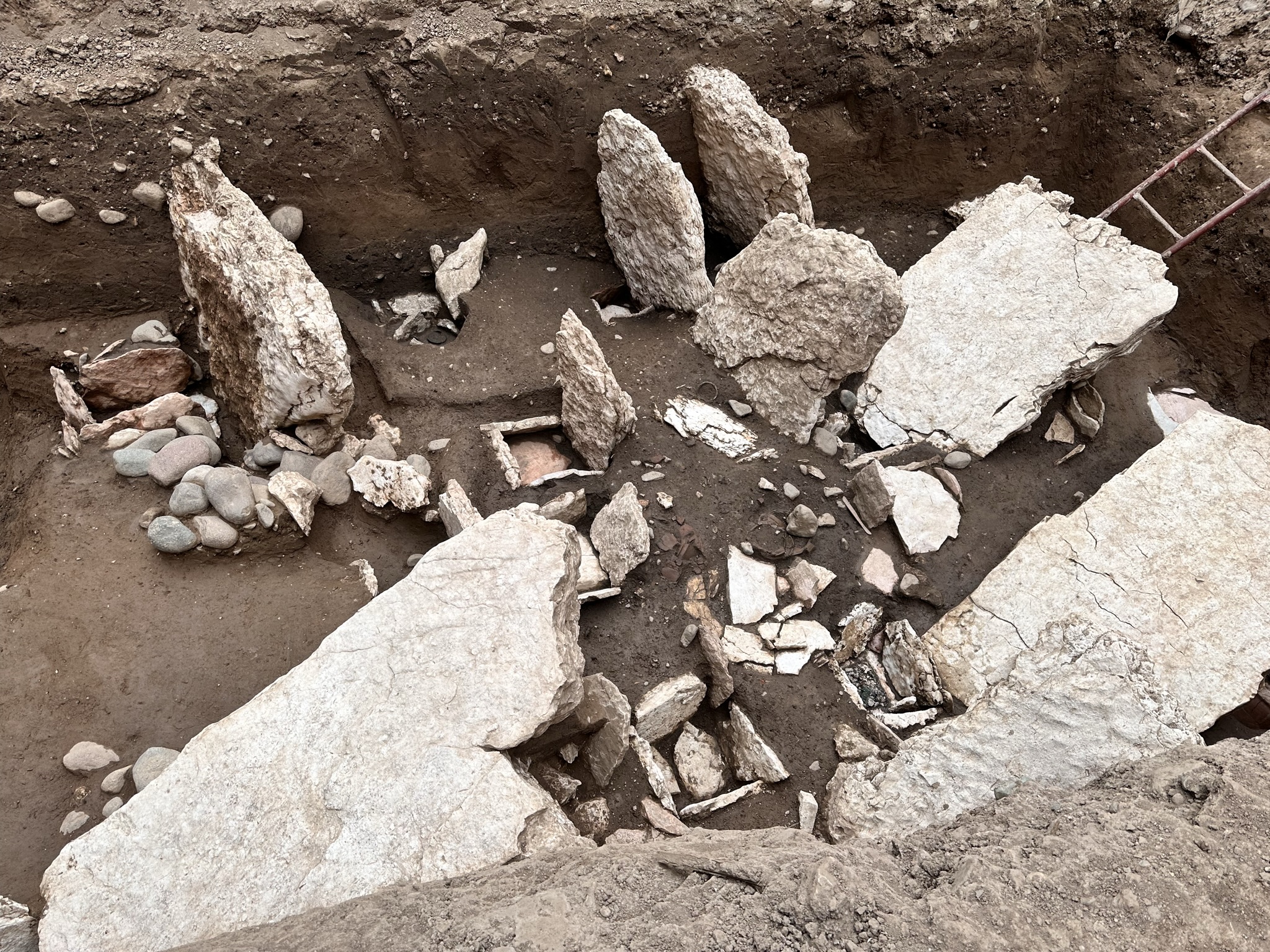
Indeed, this is an extraordinarily significant discovery: until now, Trento has always been described as a Roman city, but it now becomes strikingly clear that its history stretches much further back in time. The necropolis being uncovered dates back to the Iron Age, lying about eight meters below ground, and has so far revealed over 200 urns, complete with prestigious grave goods.
Such a finding in a city center is a true rarity for the Alpine region. On one hand, archaeologists are working diligently to recover as many artifacts as possible; on the other, they are striving to reconstruct the customs and traditions of the populations who once inhabited this area. The burials are indeed prestigious, accompanied by numerous stelae and ornaments, suggesting the presence of an elite.
To ensure the best possible reconstruction, an interdisciplinary research team has been assembled, bringing together institutions and specialists from both Italy and abroad.
Wonderful, but… what about the garages?
Naturally, the discovery required us to partially revise our property development plans. The garages had originally been designed to occupy exactly the area of the archaeological excavation, but we have identified an adjacent area, still with access from Via Madruzzo.




Leave a Reply
You must be logged in to post a comment.