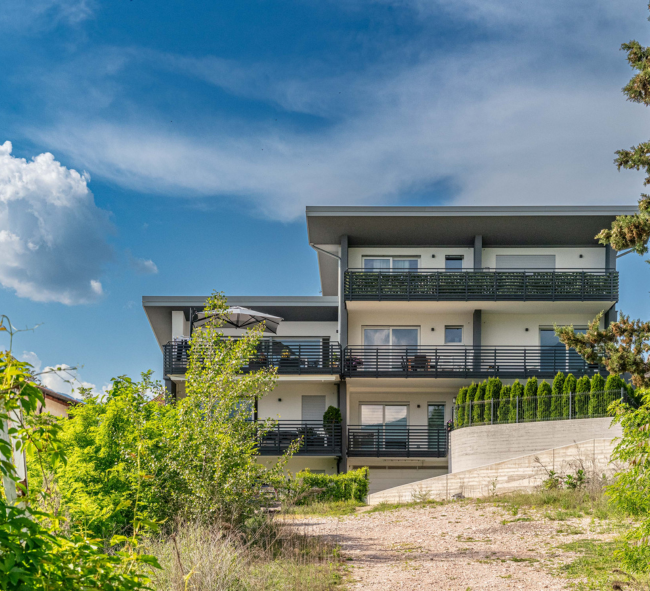
The concept of the passive house was introduced in Italy by Günther Ganthioler, the consultant with whom we have collaborated for years for the construction of buildings that will be awarded this title. Buildings that obtain passive house certification are evaluated based on their energy performance: the lower the required consumption, the higher the standard achieved.
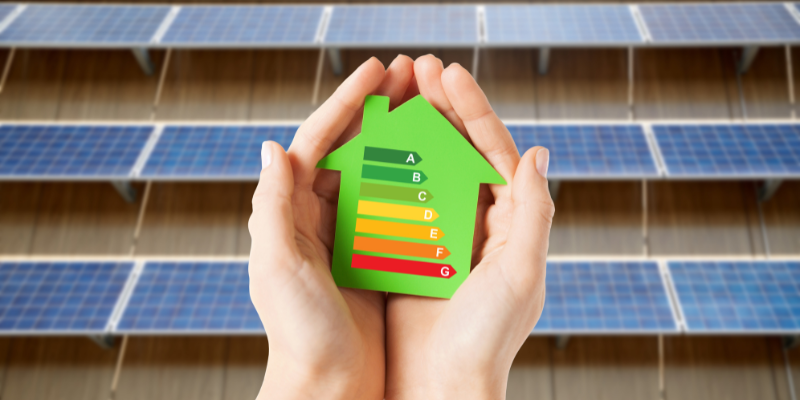
Reduced consumption, minimal heat dispersion, triple-glazed windows, high air tightness, and air exchange in a maximum of 3 hours are just some of the parameters that contribute to making a building a passive house.
So, let’s try to understand better, going into detail.
FEATURES OF THE PASSIVE HOUSE
A passive house is defined as a "bioclimatic" building, that is, a property that obtains and optimizes its energy in a calculable way from natural sources, such as the sun, the ground, and the outside air. A passive house is built so that a heating or cooling system is not necessary to maintain a comfortable temperature in summer and winter. This is because everything is optimally designed: the building envelope and the windows are perfectly insulated, and the systems allow for specific management of energy inputs, enhancing natural energy.
The main features of a passive house are:
Management of solar light
Sunlight is used to its fullest, optimizing the building's exposure whenever possible. Glazed surfaces and insulated walls are also provided in less sunny areas.
Thermal Insulation
This parameter is the true heart of the passive house. It is obtained by working on the insulation materials used for the entire construction, from the walls to the roof.
Controlled mechanical ventilation
A machine independently manages the air exchange and allows for maintaining the quality and healthiness of the air inside the buildings. The heat recovery system reduces thermal dispersion in the colder months.
Fixtures
In a passive house, the window and door frames also have high energy efficiency: they maximize the insulation of the rooms and allow solar radiation to heat them.
HOW MUCH DOES A PASSIVE HOUSE COST?
The value of a house, whether traditional or passive, cannot be defined in a rough way, because naturally there are infinite variables that come into play: the dimensions, the materials chosen, etc. A passive house certainly costs more than a traditional house. It’s difficult to say by how much, given that in general many modern buildings already have high standards in the choice of materials and construction methods. However, what profoundly affects the cost is often the certification costs. This is why it is more likely that apartment buildings are certified than single houses: in this way, the fixed costs of certification are divided among more units.
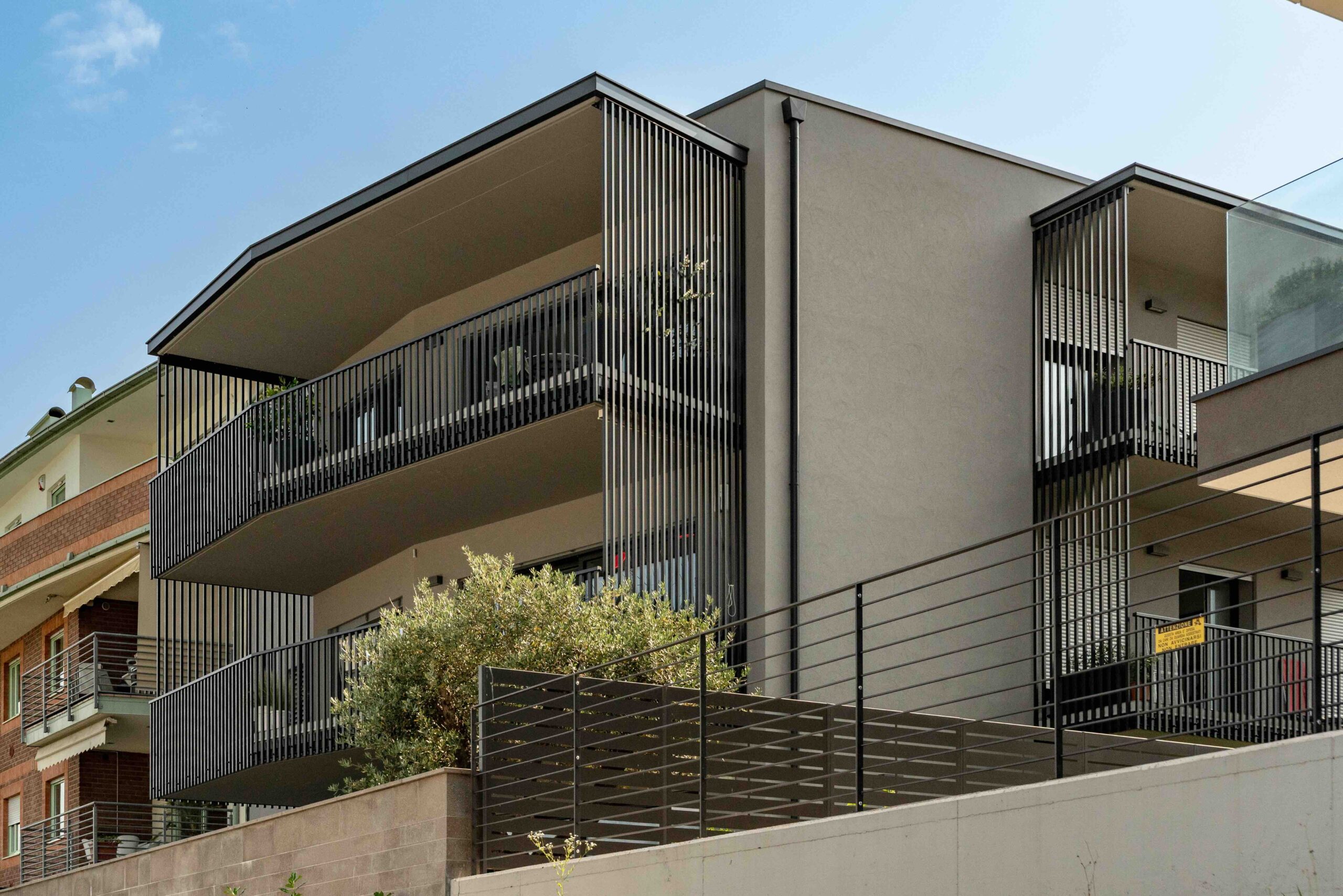
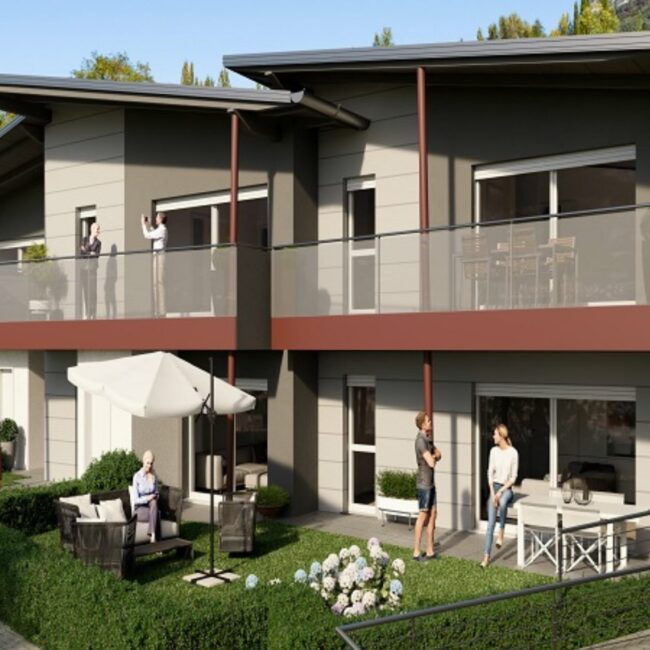
From 1969 to today, we have built almost 3000 properties. Over 50 units have obtained passive house certification: we can therefore say that Dalle Nogare is the passive house specialist in Trentino.