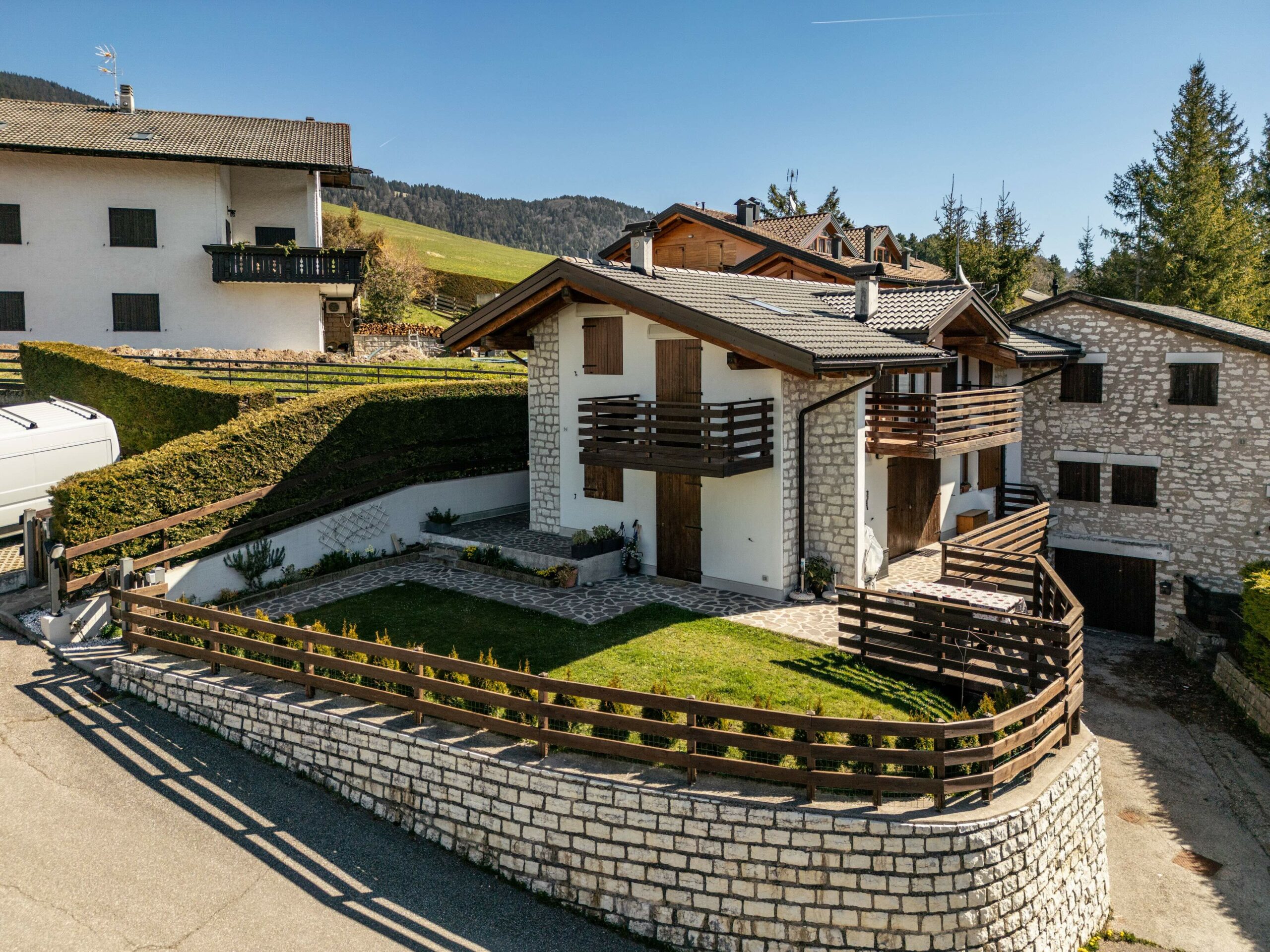
Gilmozzi Law / Primary Residence Requirement. What Does It Mean?
Looking for a second home in Trentino? If you’ve been browsing property listings for houses in the mountains or on Lake Garda in Trentino, you’ve probably come across terms like “exempt from primary residence requirement”, “exempt from first-home restriction” or “exempt from the Gilmozzi Law”. If that’s the case, you’re in luck: it means you’ll be able to use that property as a second home without any issues. If, on the other hand, there’s no mention of this, it’s best to double-check—because you could face very steep fines.
WHAT THE GILMOZZI LAW SAYS
Provincial Law 16/2005, also known as the Gilmozzi Law (named after its sponsor), is legislation designed to limit the construction of houses intended for tourist use. It applies exclusively to a number of municipalities in Trentino that are classified as “tourist destinations.”
The law allows the construction of new residential buildings only if they meet one requirement: they must be used as the primary residence of the end user. Not necessarily the owner, however. The owner may purchase one or more properties as an investment and rent them out, provided that the tenants use them as their first home (primary residence).
WHEN IS A HOUSE “EXEMPT FROM THE GILMOZZI LAW”?
Why do some buildings have to comply with this restriction and others don’t? The answer is simple: the law applies to almost all new constructions, but it does not apply to existing buildings. That’s why all properties that are renovated are automatically exempt.
WHAT ARE THE PENALTIES FOR NON-COMPLIANCE?
I furbetti non hanno vita semplice: se da un controllo dovesse risultare che non rispettano il vincolo di residenza ordinaria, saranno obbligati al pagamento di una sanzione di € 15.000 e a rispettare il vincolo, pena una nuova multa al controllo successivo.
Se cerchi quindi una seconda casa in Trentino, fai molta attenzione che l’immobile sia “esente legge Gilmozzi” / “esente vincolo prima casa”/ “esente vincolo residenza ordinaria”.